Read this interview in English
Dieses Interview auf Deutsch lesen
Please note: This interview was originally conducted in German and has been translated into English.
A school is far more than a building, a timetable, or a curriculum. It is a place where children begin to understand who they are, where friendships are formed, and where curiosity slowly evolves into knowledge, confidence, and character. For many families today, choosing a school is no longer just about education—it is a conscious decision about the environment that will shape their child’s development, mindset, and future.
In conversation with Jo Prior, Principal at SIS Swiss International School Stuttgart-Fellbach, it quickly becomes clear that education here is understood in a broader, more holistic sense. Jo Prior brings extensive experience from both national and international educational environments. Her professional journey reflects a clear belief: school should never be reduced to academic performance alone, but must always consider the individual as a whole.
SIS Stuttgart-Fellbach embodies this philosophy; True bilingual education, international atmosphere, and academic excellence from the foundation of its concept. Yet what truly defines this school often lies beneath the surface: the culture of respect, the close relationship between teachers, parents, and students, and the commitment to preparing young people not just for exams, but for life in a complex and interconnected world
–
–
Education today is no longer just about knowledge – it shapes mindset, perspective, and future readiness.
–
–
–
The questions were asked by KD Magazin.
The answers were provided by Jo Prior, SIS Swiss International School Stuttgart-Fellbach
–
Many parents today consciously choose an international private school. Has education become less of a given and more of a strategic investment in a child’s future?
I wouldn’t reduce education to a purely financial investment, even though it clearly plays a significant role in shaping a child’s future. From a pedagogical perspective, education is always about much more than qualifications or career opportunities. What parents truly want is for their children to enjoy going to school, to feel seen, to develop a genuine curiosity for learning, and to grow into confident and responsible individuals. Choosing an international private school is often a deliberate decision. Many families are looking for a distinct set of values—a combination of academic quality, personal support, and an open, international mindset.
SIS Stuttgart-Fellbach is known for its consistent bilingual approach. Is multilingualism today a competitive advantage or simply a necessity?
Multilingualism has evolved beyond being just a competitive advantage. In many ways, it has become part of everyday reality in a globalized world. For us, however, it is not just about speaking English fluently. Language is deeply connected to the way we think, communicate, and understand different perspectives. It opens doors to cultures, values, and ways of interacting with the world. That is why our bilingual concept goes far beyond language acquisition. Our students are not only expected to speak multiple languages, but also to feel confident navigating different cultural environments. In today’s interconnected world, this is an essential life skill.
–
–
“Language is not just communication – it is access to thinking, culture, and a deeper understanding of the world.”
–
–
Stuttgart is economically strong and internationally connected. What role does an international school play in such an environment?
In a region like Stuttgart, an international school acts as a bridge between local roots and global perspectives. The area is shaped by strong industries and a deeply rooted entrepreneurial culture, yet it is also highly international. Our role is to prepare students for a world where cultural awareness, language skills, and adaptability are essential. At the same time, it is important that they remain connected to their identity and background. We often describe our goal as educating “globally minded individuals with a strong sense of who they are.” An international school should not exist in isolation, but rather reflect and connect both local and global realities.
–
–
–
–
How do you balance academic excellence with personal development and students’ mental well-being?
It starts with the fundamental belief that school is not only about performance, but also about relationships. Of course, academic standards are high, and a bilingual curriculum adds an additional level of challenge. However, we do not rely on pressure as a primary driver. Instead, we focus on guidance, structure, and personal support. Our class sizes are intentionally small, and students have access to multiple points of contact within the school. If a child needs support, we approach it collaboratively—teachers, parents, and counsellors work together to find solutions. Mental well-being grows from feeling understood and supported, not from constant evaluation.
A private educational institution carries not only pedagogical but also social responsibility. How do you define this mindset at SIS Stuttgart-Fellbach?
This responsibility is a core part of how we see ourselves. A school should never be reduced to the classroom alone; it must always consider the broader society in which students will eventually live and contribute. For SIS Stuttgart-Fellbach, this means that we do not focus solely on academic knowledge, but consciously place values such as honesty, responsibility, respect, and empathy at the centre of everything we do.
It is important to us that our students learn to take responsibility not only for themselves, but also for others. This is reflected not only in everyday school life, but also in specific projects and in the way we engage with the wider community beyond the school. For us, education always means guiding young people to become individuals who see themselves as active and responsible members of society.
–
–
“Children learn best where they feel seen – not where they are only evaluated”
–
–
Private schools are sometimes criticized for contributing to social division. How do you respond to that discussion?
In Baden-Württemberg, there is a clearly defined legal framework for private schools, and as a recognized substitute school, we operate within these binding regulations. We do not simply create our own system, but fully comply with the state’s educational mandate. This also includes making education accessible to families with different financial backgrounds.
We therefore see our role within the educational landscape not as one of separation, but of complementarity. We offer a very specific concept that represents a conscious and meaningful choice for many families.
Which skills will matter more in the next 10–20 years than pure knowledge?
The ability to learn continuously will become more important than memorizing information. Knowledge remains valuable, but in a world where information is always accessible, the real skill lies in how we process and apply it. Students need to develop critical thinking, adaptability, and the ability to navigate new topics independently. Communication skills, problem-solving abilities, and emotional intelligence will play an increasingly important role. Education should therefore not focus solely on content, but also on the methods and mindset required to keep learning throughout life.
–
–
–
–
How do you see the role of artificial intelligence in education—risk or opportunity?
I primarily see AI as an opportunity, as long as it is used thoughtfully. It will not replace teachers, because education is fundamentally about relationships and human interaction. However, AI can support many processes, from preparation to individualized learning plans. If teachers can save time through technology, they can invest more energy into working directly with students. At the same time, it is essential to teach children how to use AI responsibly—as a tool, not as a substitute for thinking. Like any technological advancement, it changes processes, but not the core purpose of education.
Many of your families come from entrepreneurial backgrounds. Do you actively promote leadership and entrepreneurial thinking?
We focus on fostering responsibility, independence, and initiative. These qualities naturally support entrepreneurial thinking, but they are equally valuable in many other contexts. Our goal is not to push students into a specific career path, but to equip them with the confidence and skills to take ownership of their decisions. Many of our students already grow up in environments where responsibility is emphasized. We aim to nurture that mindset while ensuring that personal development remains the priority, not pressure or expectation.
How important is it today to prepare students for international universities and careers?
It is increasingly important, as educational and professional opportunities are no longer confined by national borders. Many of our students grow up in international environments or have a natural openness to global experiences. With the German Abitur and the International Baccalaureate, we provide pathways that allow them to choose their direction freely. Our goal is not to push students abroad, but to give them the option to pursue international opportunities if they wish. Education today should be designed in a way that keeps doors open, both locally and globally.
–
–
–
–
What responsibility does SIS Stuttgart-Fellbach carry towards the region beyond the school itself?
We see ourselves as part of a larger community. Our connection to the region is reflected in partnerships, projects, and social engagement. Students are encouraged to take part in initiatives that connect them to the world beyond the classroom. Responsibility is not something that should only be taught theoretically—it needs to be experienced. When students understand that their actions have an impact, they develop a stronger sense of belonging and purpose.
How have parents’ expectations changed over the past decade?
At its core, I believe parents’ expectations have changed less than one might think. Even today, parents primarily want their children to enjoy going to school, to feel safe, to develop a love of learning, and to grow into confident young individuals.
In recent years, our school has become significantly more international, and as a result, families bring diverse cultural perspectives on schooling, care, and education. This enriches the exchange and broadens our understanding of what a school can offer.
I would therefore say that it is not the fundamental expectations of parents that have changed, but rather the context in which these expectations are expressed today.
Beyond knowledge, which values are most important in your daily work?
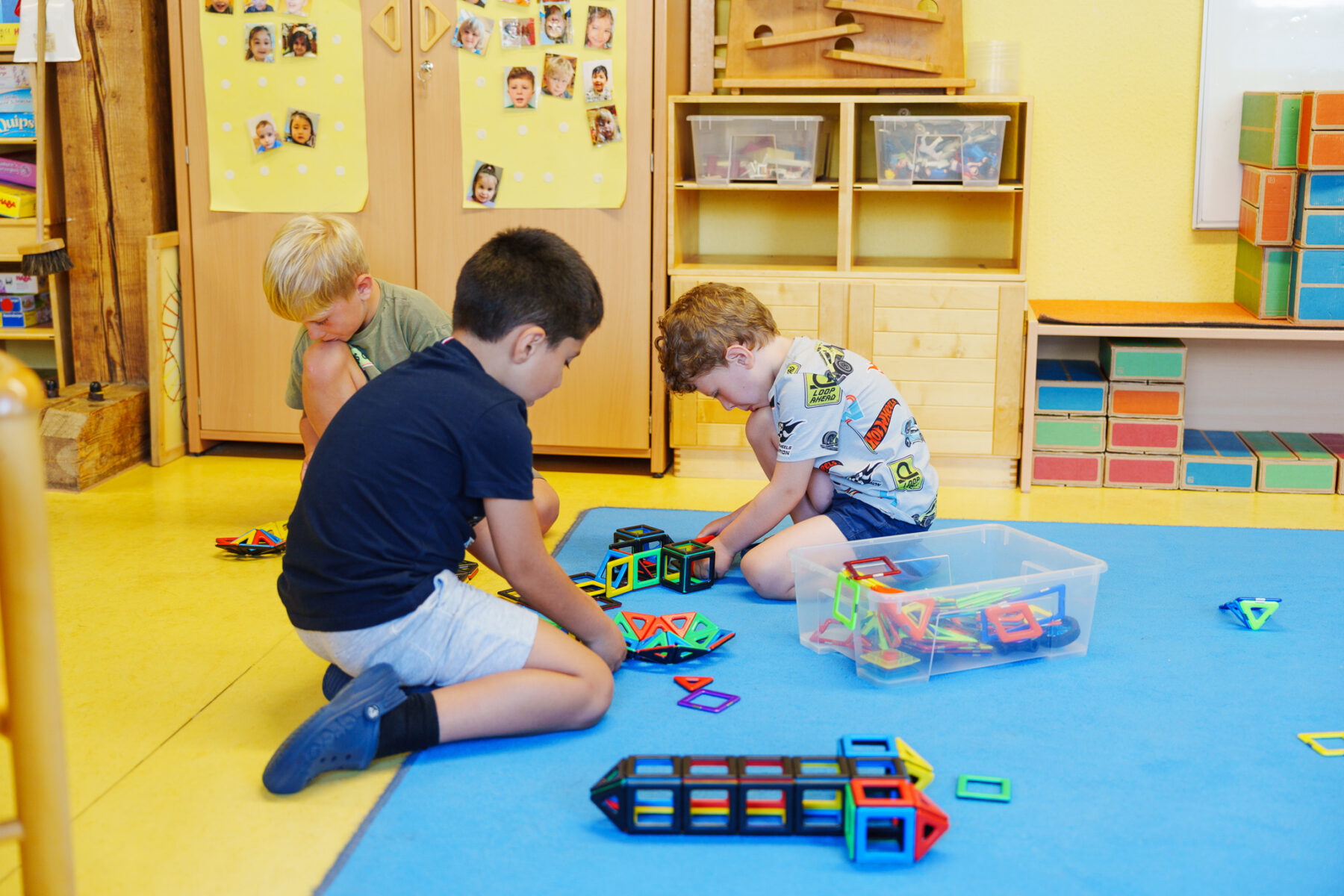
Honesty, respect, responsibility, and empathy are fundamental. Students learn as much from relationships and role models as they do from lessons. Respect is reflected in how we communicate, responsibility in how we act, and empathy in how we understand others. In an international environment, these values become even more important, as they create the foundation for a respectful and open community.-
–
–
–
–
What motivates you personally to work in education?
What motivates me most is working with people, especially the opportunity to support children over a longer period of time. Schools are dynamic environments where no two days are the same. I have experienced other professional settings, but I quickly realized that I missed the human connection and the sense of purpose. In education, you can see growth happening in real time. Being part of that journey is both a privilege and a responsibility.
–
–
“Education does not end with a diploma – it is reflected in how a person navigates life.”
–
–
If we speak again in ten years, how would you define success for SIS Stuttgart-Fellbach?
Success would mean that our students leave the school as confident, open-minded, and responsible individuals. Academic achievements are important, but they are only part of the picture. True success is reflected in how students navigate the world—how they think, how they interact with others, and how they approach challenges. If former students look back and say that they felt supported not only academically but also personally, that would be the most meaningful confirmation of our work.
–
—
–
Conclusion
At the end of this conversation, one idea stands out clearly: meaningful education begins long before grades, diplomas, or career paths. It starts with the environment in which a child grows, the values they experience, and the relationships they build along the way.
The SIS Swiss International School Stuttgart-Fellbach does not present itself as just another institution. It positions itself as a space where learning, personal development, and community come together. This becomes visible not only through its bilingual concept or international outlook, but through the way people interact—with openness, respect, and a shared sense of responsibility.
What makes this approach particularly compelling is the balance between global perspective and local grounding. Students are encouraged to think beyond borders while staying connected to their roots. They are prepared not just for academic success, but for a world that is constantly evolving.
Perhaps this is the most relevant definition of education today, not simply the transfer of knowledge, but the development of individuals who can navigate complexity with confidence, empathy, and a clear sense of direction.
–
–
Visit & Directions – SIS Swiss International School Fellbach-Stuttgart
Address:
Schmidener Weg 7/1
70736 Fellbach
Germany
👉 Find more information here: SIS Swiss International School Stuttgart-Fellbach
👉 Follow on Instagram: sisgermany
Public Transport:
VVS route planner
Directions & Route:
👉 View route on Google Maps
Google Maps Route SIS Swiss International School
👉 Discover more interviews, insights, and conversations with inspiring personalities here:
German Version – SIS Swiss International School